

Design pipeline walkthrough
From idea to published design doc — one conversation.
The dev-story design pipeline end to end on a realistic idea: intake, the prior-art scout, the refined brief, the brief judge, the generated draft, and the published design document — every advancing turn visible on the interactive chat surface.
Can a Kitsoki story model a realistic repo workflow?
The handoffs between rooms, operator decisions, host calls, and replayed results.
The workflow is replayed from fixtures instead of improvised for the site.
Key beats
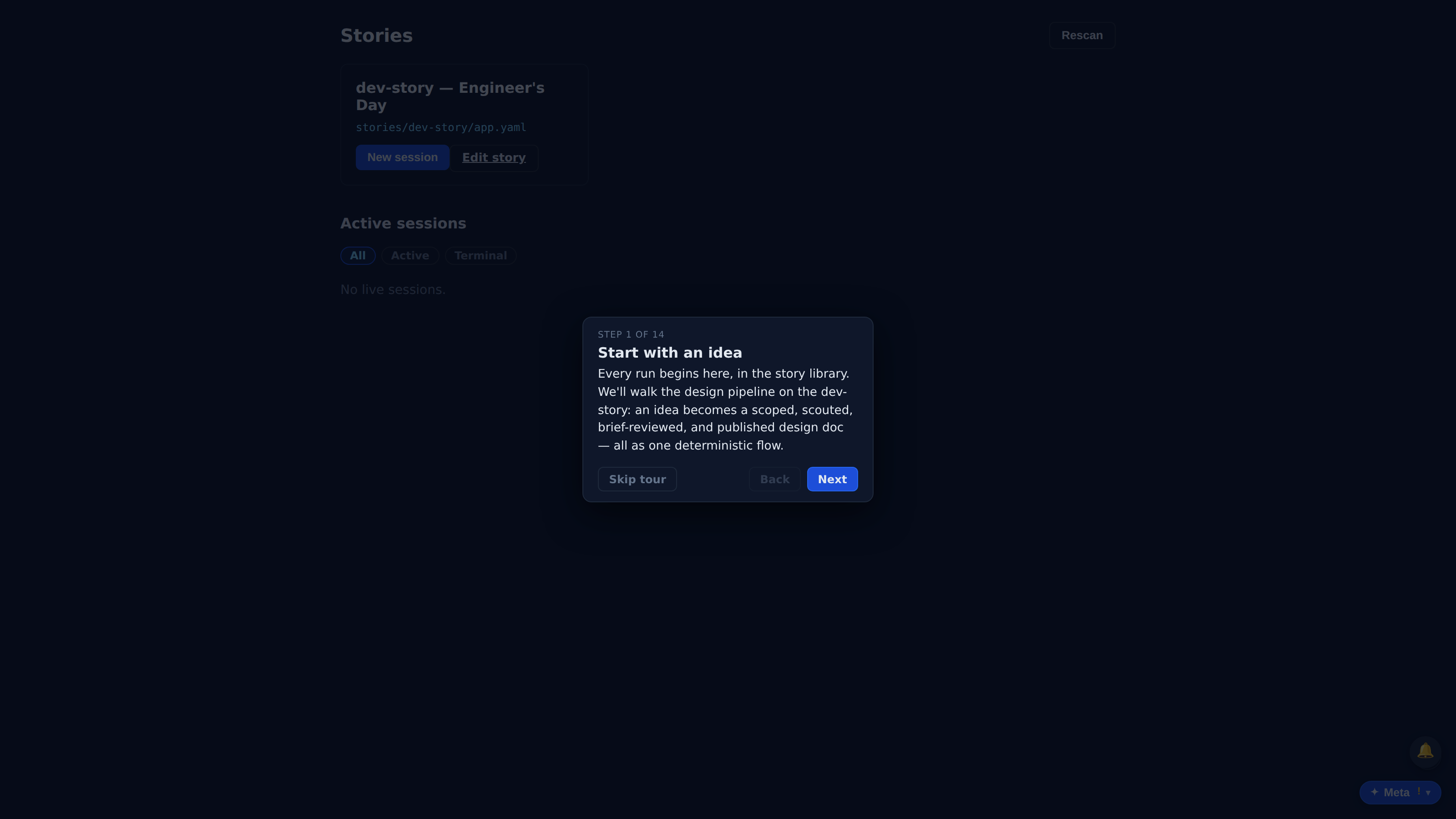
Every run begins here, in the story library. We'll walk the design pipeline on the dev-story: an idea becomes a scoped, scouted, brief-reviewed, and published design doc — all as one deterministic flow.
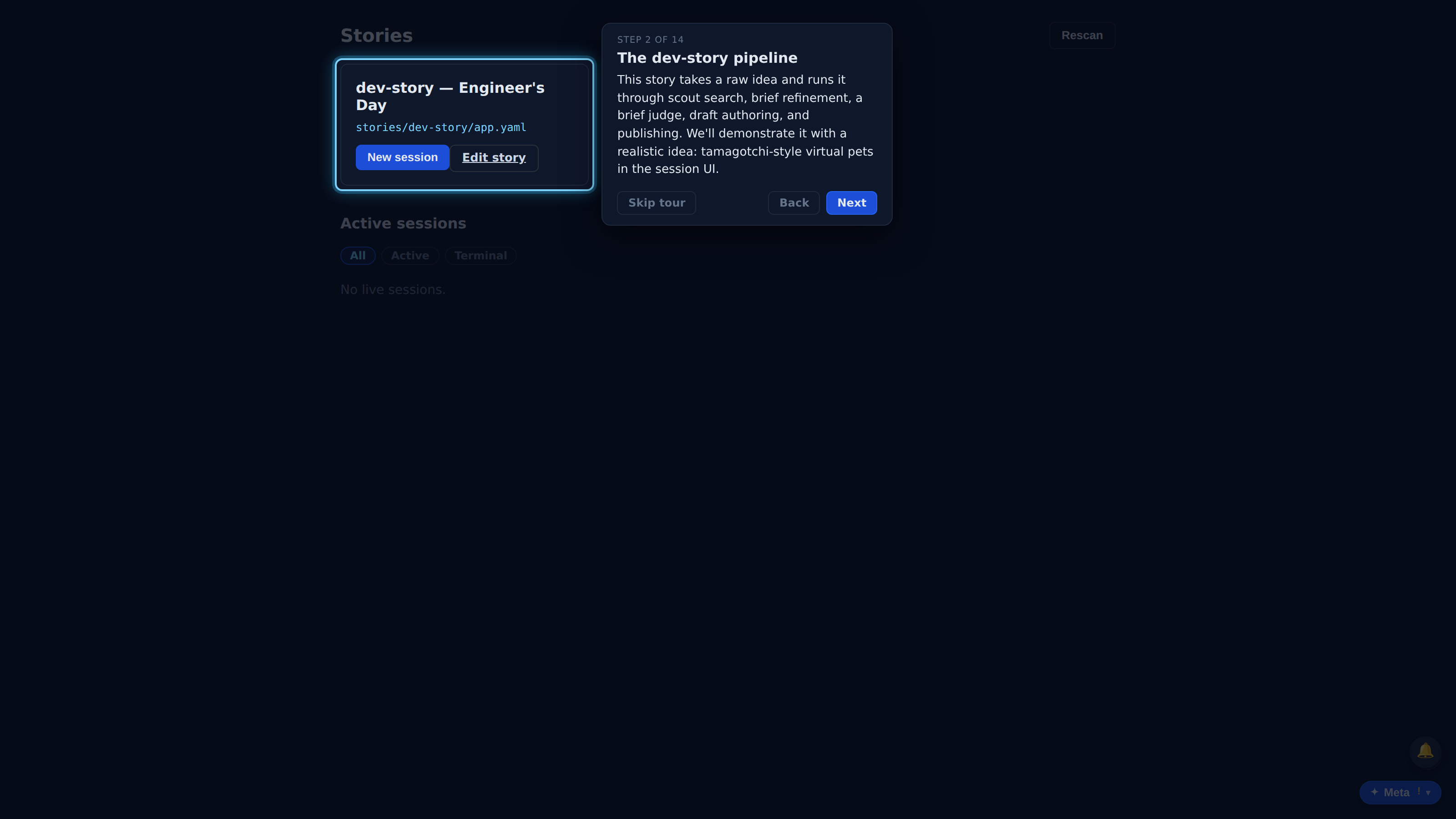
This story takes a raw idea and runs it through scout search, brief refinement, a brief judge, draft authoring, and publishing. We'll demonstrate it with a realistic idea: tamagotchi-style virtual pets in the session UI.
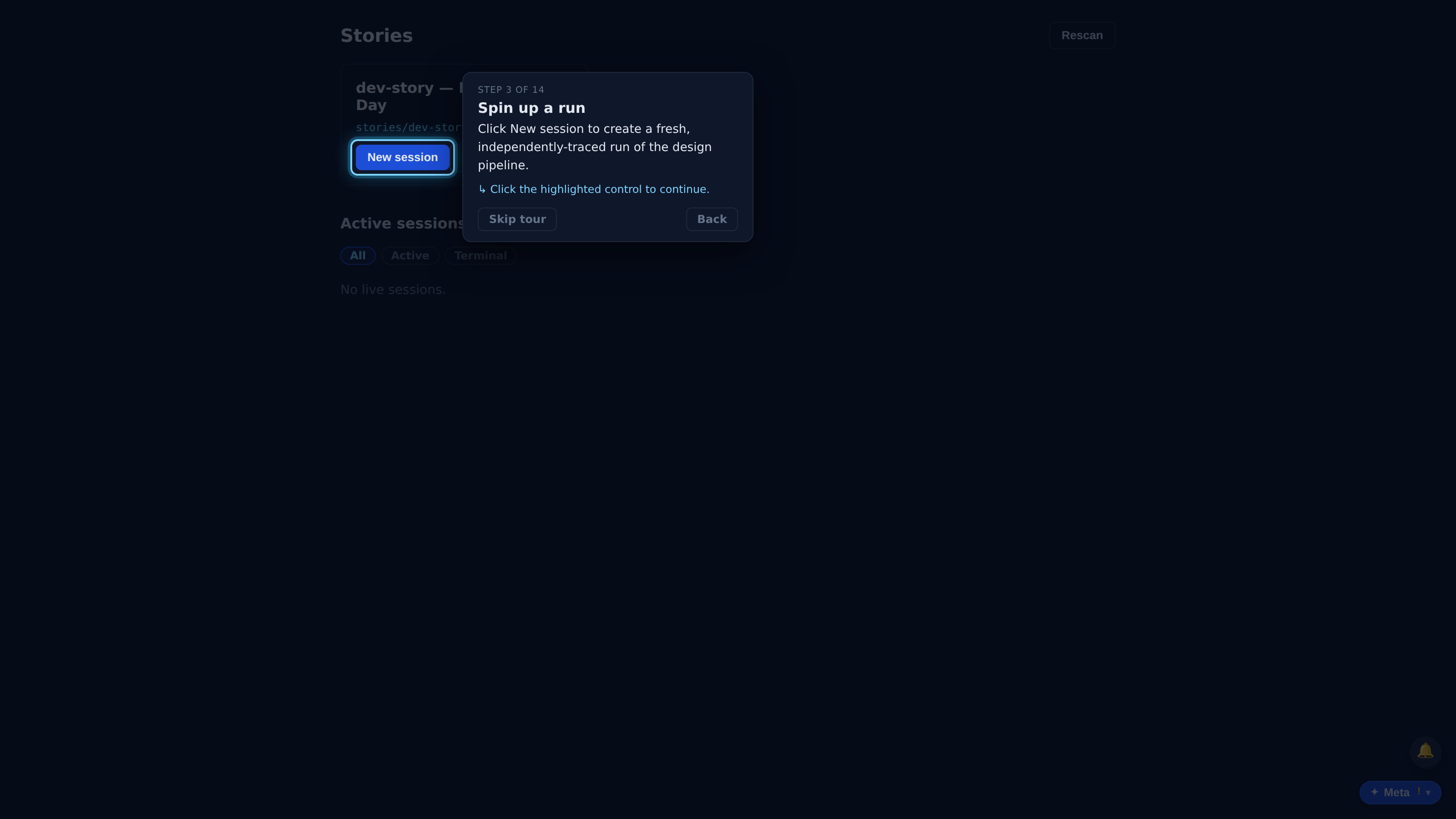
Click New session to create a fresh, independently-traced run of the design pipeline.
Type your idea in the chat. kitsoki will name the design, search for conflicts, scaffold a brief, and draft a full design document — each stage visible on the live trace to the right.
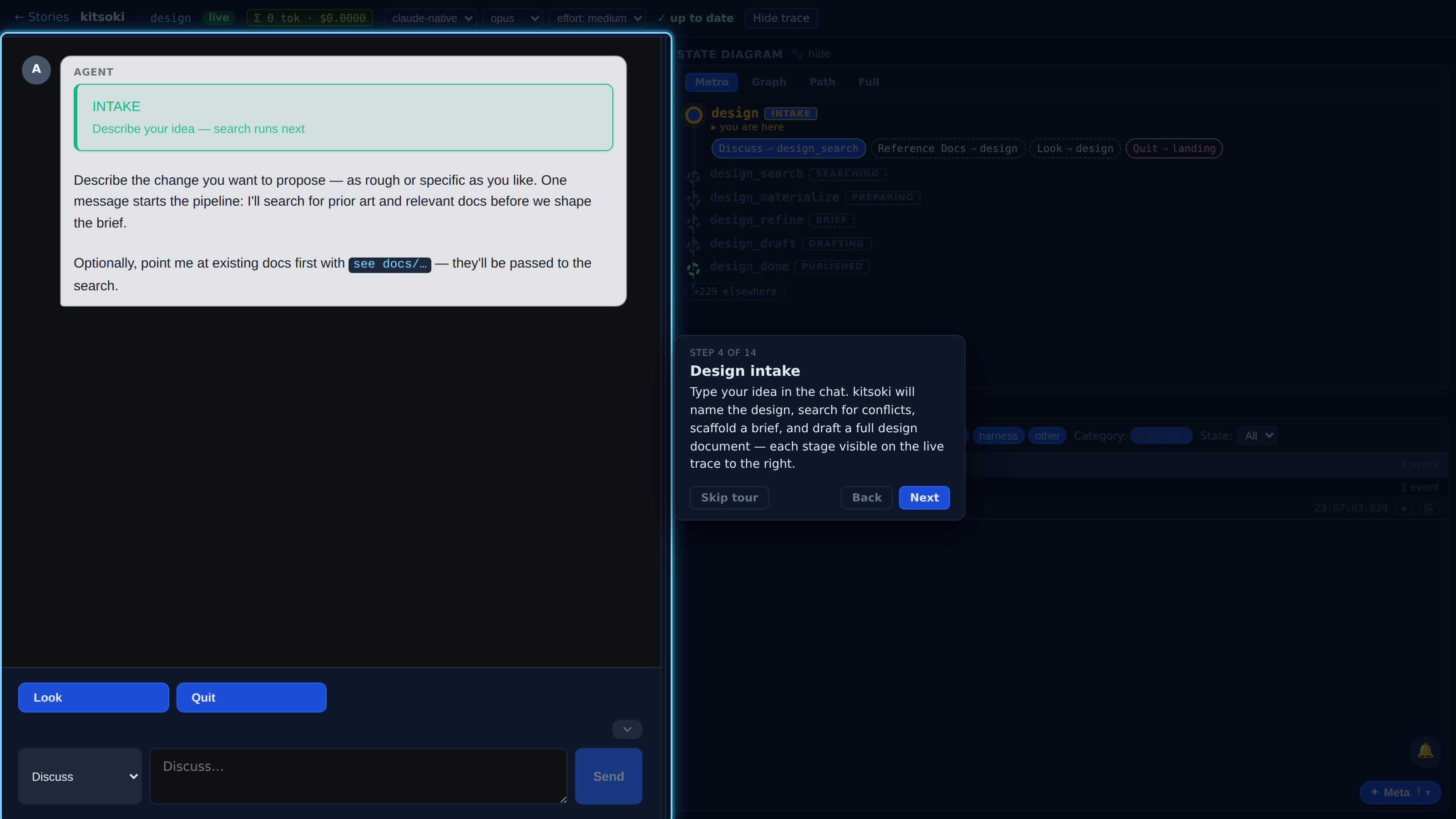
We type the idea into the chat composer: a tamagotchi-style virtual pet widget for the session UI. Submitting mints a slug and kicks off the scout search for overlapping work.
Full recorded walkthrough (14 steps)
kitsoki searched existing designs for overlap. No conflicts found — the idea is clear to proceed. The current room shows at the top, and every stage lands on the live trace.
The room offers exactly the moves it allows as buttons. "confirm" advances to the brief editor; "quit" drops back to the main menu. Nothing invalid is possible.
The idea has been distilled into a structured brief, opened in the IDE for editing. A refiner agent read the idea and flagged the key gaps: the pet's lifetime scope, and which UI surface hosts the widget.
When the brief looks right, press "ready". A judge reviews it for completeness — clear why, scoped change, named kind. If it passes, the pipeline advances.
The brief judge's verdict is "continue": clear why, scoped change, kind is story. "advance to draft" is now the primary action — proceed to draft authoring.
The brief was approved, so a draft author wrote the full design document: a persistent virtual-pet widget in the session header, its mood tracking the story phase, state persisted in world vars.
Review the draft, then "accept" runs the publish script: it moves the draft from the .workspace staging area to docs/proposals/tamagotchi-pet-ui.md.
docs/proposals/tamagotchi-pet-ui.md is now part of the queue. The full pipeline — idea → scout → brief → judge → draft → published — ran as one deterministic, fully-traced flow.
You've seen the whole flow on-camera: every input, button, and room view, with the live trace recording each stage. Hit '?' anytime to replay this tour.